
NYSSR.NET / RESOURCES
Discover services without a central registry
See how redundant nyssr.net registries provide service discovery and load balancing without making one central registry a single point of failure.
If service locations change as nodes are added, removed, or disconnected, hardcoded endpoints and a single registry become operational liabilities. nyssr.net makes discovery part of the distributed runtime.
Automatic service discovery and load balancing are core features of nyssr.net. The microservice registry provides both, but it must not become a single point of failure for the network.
Redundant by design
Several registry instances can run on different nodes. When a microservice registers or deregisters, the registry instances share the update. A newly added registry synchronizes its entries before it starts serving requests.
Registries broadcast their presence when they start. New nodes learn about available registries automatically as they join the network.
Key idea: Discovery remains available because the discovery service is distributed as well.
Local helpers select a registry
Each node can provide a local helper plugin. It tracks the registries currently available and helps local services select a suitable one.
When a service addresses another service by ID, the helper asks the router for a nearby registry. During startup it can accept registration information before the first registry broadcast arrives, then complete registration as soon as network information becomes available.
Interested services can also subscribe to registry changes and react when registries are added or removed.
Address a service by ID
A message only needs the target microservice's ID. The ID can be numeric, textual, or a UUID. The registry resolves it to a running instance.
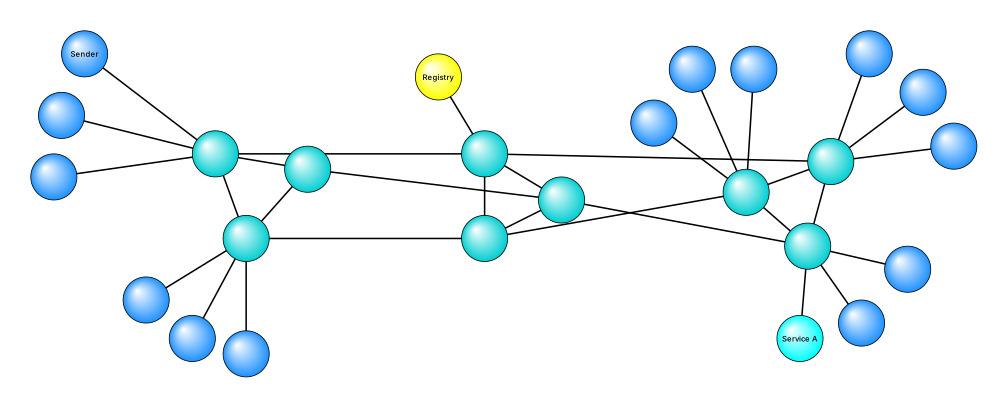
If several instances use the same ID, the registry selects one of them. Load balancing is part of service discovery — no extra proxy or service mesh is required.
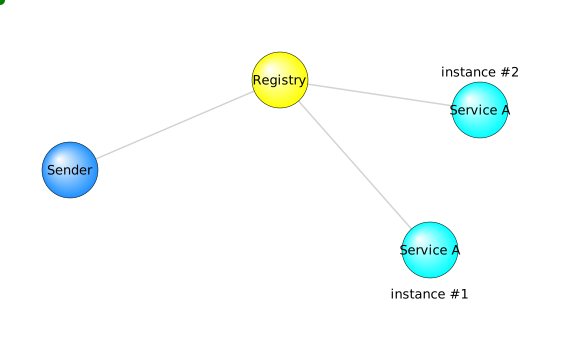
If a response is requested, it can include the instance's direct address. Follow-up messages can then bypass the registry. If that node becomes unavailable, the sender can fall back to the service ID and resolve another instance.
What this provides
- No central registry that can stop the whole network
- Automatic discovery when nodes join
- Load balancing across service instances
- Local helpers for fast registry selection
- A fallback path when an instance disappears
Scaling: Add registry instances on additional nodes as the network grows.
Resilience: Keep discovery available even when one registry or route fails.
Efficiency: Resolve the first message by ID and use direct addressing for follow-up communication.